
For the module HI3001: 1984 - Past, Present, Prophecy, we're told to write an essay on George Orwell's Nineteen Eighty-Four and how applying an aspect of it to another theme or text or incident can give us an interest reading. I decided to go with writing about one of the most intriguing and thought-provoking films I've watched: Parasite, directed by Bong Joon-ho. I'm pretty satisfied with my writing in this short piece, so I wanted to share it here as well. Have a read. :)
---
— George Orwell, The Road to Wigan Pier
Nineteen Eighty-Four is often punctuated with the narrator’s acute observations of unpleasant scents that are normalized under Big Brother’s regime in the text’s dystopian society. Yet, when we attempt to apply these smells to the realities of today, bad smells are actually not contained within dystopian fiction: they are the telling realities of the world’s lower class. When dealing with actual applications of stench in today’s world, the fictional quality of the dystopia Nineteen Eighty-Four pales in comparison to the strikingly realistic setting of Bong Joon-ho’s Parasite. Thus, while stench may seem to be a quality only present in dystopian fiction, in reality, it is the unavoidable sensation lower-class communities are forced to endure throughout their lives.
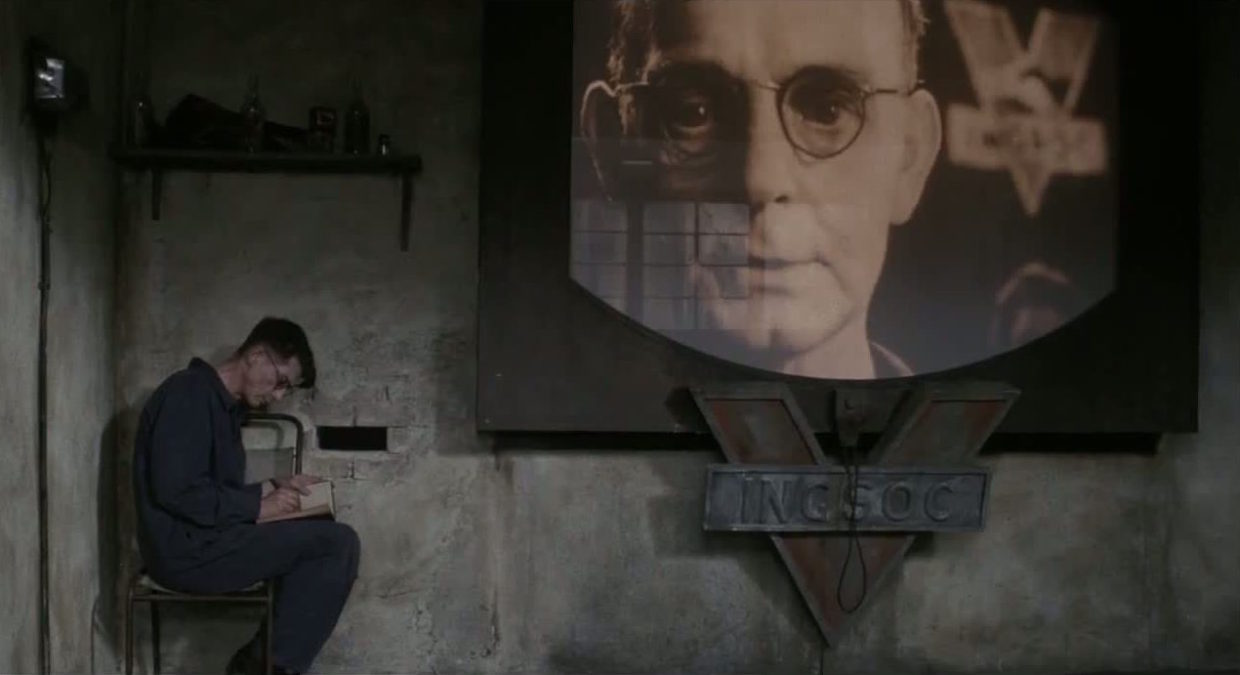
In the world of Nineteen Eighty-Four, the regime of Big Brother is characterised by unpleasant smells as noticed by the protagonist, Winston Smith. The very first chapter of the text opens with Winston returning home to “the hallway [that] smelt of boiled cabbage and old rag mats” (Orwell 3). The narrator’s use of a matter-of-fact and straightforward tone while including such a smell in the first setting of the text indicates how the smell is a ordinary feature of the world in which Winston resides. Furthering this assertion is how such smells are then described to be “usual” and “common to the whole building” (25), pointing toward how the owners of the entire estate are already impervious to the strong unpleasant smell throughout their entire area. With an opening that is partially yet noticeably defined by the stench of a living space, the introduction to the world of Nineteen Eighty-Four Such sets bad smells as one of the common traits of life under the regime of Big Brother.
Similar to Nineteen Eighty-Four, the film Parasite, directed by Bong Joon-ho, opens with a scene that is also primarily illustrated through actions that insinuate distressing smells. In the semi-basement where the Kim family resides, the family is portrayed to be immune to the foul smells that greet them every day. As they wake up, they endure the smell that mercilessly wafts from the drunk man’s daily piss outside their windows (Bong 00:06:07-00:06:24), and the reeking fumigation that the family believes will provide the usually expensive bug extermination services for free, even if it means bearing the uncomfortable fits of coughing (00:03:27-00:04:00). The striking visual quality of the film allows the stench of these actions to permeate the audience’s minds even more impactfully through the characters’ strong and apparent reactions, despite how impossible it is for the audience to actually smell the stench. For the poor, these smells are not matter-of-fact, they are vexatious. Yet, the smells are an aspect of life that they are made to face due to the conditions of their lives.
Hence, while both Nineteen Eighty-Four and Parasite open their stories with similar smells, the difference in genre indicates how the former’s depiction of stench, associated closely to the unpleasant state of living under a regime, is merely a fictitious quality. The latter’s form as a realistic film shot in actual places demonstrates how Orwell’s fictitious rigid regime is in actuality South Korea’s harrowing reality for the lower class. In Nineteen Eighty-Four, Winston resides in the unpleasantly smelled “Victory Mansions” (Orwell 3), a neglected set of living space that technically does not exist in our world. What heightens this unrealistic quality is how Victory Mansions is set in the city of London, which, in the world of the text, is in the fictional superstate called “Oceania” (5). The striking difference between the geography of the text and that of our world lends the story an exaggerated trait that hinders readers from concluding the text as an actual representation of the world. In stark contrast, Parasite’s opening of the semi-basement is set in Seoul’s shantytown “Ahyeon-dong”, a real “district of crumbling brick buildings where rents for half-basement flats have doubled in the past decade” (McCurry). The choice of setting the Kim family in an actual geographical location in Seoul imparts the film a poignant semblance of reality, even if it is a fictional film. The smells in both works may be portrayed similarly, but the real setting of Parasite, when read against Nineteen Eighty-Four, illuminates the salient notion that stench is a reality for the lower class, and not a mere quality of fictitious regimes.
While the stench in Victory Mansions enriches the experience of being immersed into the dystopian world created by Orwell, its overtly fictional setting strongly dismantles its’ realism, drawing a bold line between the fictional world and the reality of today. The Kim’s semi-basement, however, provokes viewers by being set in an actual neighbourhood. The stench in Parasite thus reflects the reality of actual classist regime, whereas Nineteen Eighty-Four merely conjures one.

